The Complete Buyer’s Guide to Athletic Windscreens: Types, Materials, and Customization

An athletic windscreen may seem like a simple accessory on a sports field, but it plays a far more important role than most people realize. From creating a cleaner, more professional-looking facility to improving playing conditions by reducing wind interference, windscreens have become essential for schools, parks, universities, and professional complexes. They are just as much about function: wind reduction, privacy, and comfort, as they are about form, adding colour, cohesion, and branding to outdoor spaces.
This guide is designed for athletic directors, facility managers, coaches, and anyone responsible for maintaining or upgrading a sports venue. Whether you're refreshing a baseball outfield, updating a tennis court, or branding an entire athletic complex, this complete buyer’s guide will walk you through everything you need to know before investing in an athletic windscreen.
Key Takeaway
-
Athletic windscreens improve field appearance, reduce wind, and enhance visibility and privacy.
-
Different sports require different windscreen features based on wind exposure, visibility needs, and privacy concerns.
-
Mesh, vinyl, and polyester each offer unique benefits, with mesh being the most durable and versatile option.
-
Custom colours, logos, and reinforced finishing help windscreens boost branding and longevity.
- Accurate sizing, proper installation, and budget planning ensure a long-lasting and cost-effective windscreen investment.
What Is an Athletic Windscreen?
In sports facilities, a windscreen is a durable, often custom-printed panel that attaches to chain-link fences to reduce wind, create a consistent backdrop, and enhance privacy. It isn’t just a field decoration; it’s a practical piece of equipment designed to improve performance and viewer experience.
You’ll typically see windscreens installed on baseball outfield fences, softball backstops, football practice field perimeters, tennis court enclosures, and multi-sport complexes. These screens help stabilise flight paths in windy conditions, create uniform backgrounds that improve visibility, and elevate the overall look of a venue.
Beyond function, an athletic windscreen is an opportunity for branding. Schools can display team colours or mascots, while tournament organisers can feature sponsors or event graphics. It’s this combination of performance and presentation that makes windscreens so widely used.
Types of Windscreens
Not all sports facilities have the same needs, and that’s why choosing the right type of athletic windscreen is essential.
Baseball windscreens commonly stretch across long outfield fences and require a balance of airflow and durability. These surfaces often experience strong wind exposure, so materials like breathable fence mesh are ideal. Softball fields follow a similar approach, although the smaller dimensions may call for slightly lighter materials depending on local weather conditions.
Football practice fields use windscreens mainly for privacy. Teams often want to block outsiders from observing training sessions, making heavier screens or full-coverage options more suitable. Tennis courts, on the other hand, need windscreens primarily to create visual consistency. Players rely on uniform backgrounds to track fast-moving tennis balls, so screens with strong opacity and colour uniformity work best.
Each sport carries different design considerations: crowd visibility, wind pressure, height requirements, and branding expectations. Understanding how your field operates day-to-day makes choosing the right windscreen much easier.
Material Options: Mesh, Vinyl, and More

Most athletic windscreens are made from one of three materials: mesh, vinyl, or lightweight polyester-based fabrics. Each offers its own benefits depending on field conditions and usage requirements.
Mesh is the most popular option by far, thanks to its ability to allow airflow while still providing strong visual coverage. It is especially useful for venues exposed to strong winds, as the small perforations reduce strain on both the material and the fence structure. Mesh windscreens are durable, flexible, and suitable for large installations such as baseball and football fields. This type of fence mesh also prints well, making it ideal for custom graphics and school branding.
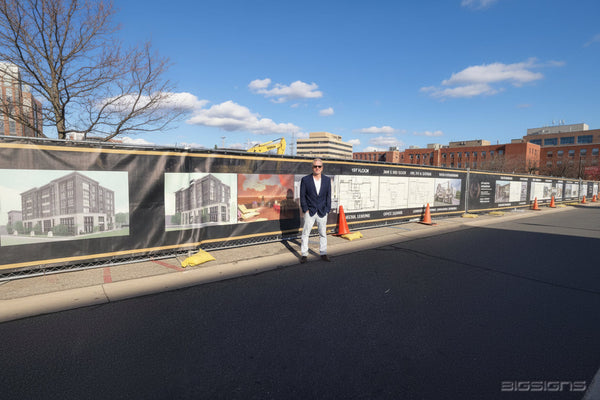
Vinyl windscreens, by contrast, deliver maximum visual impact. They offer a smooth, solid surface that makes graphics appear bold and vibrant. Vinyl is heavier and blocks more wind, meaning it’s not always the best choice for extreme weather conditions unless professionally installed. While it is commonly used on construction perimeters, it also sees use in sports when complete branding or privacy is required.
Polyester and fabric screens exist as lighter, budget-friendly alternatives. While not as durable as mesh or vinyl, they still serve well for temporary events, indoor spaces, or facilities with mild outdoor conditions.
When comparing materials, the key factors include airflow percentage, UV resistance, lifespan, and print quality. Mesh tends to dominate in all-around athletic use because it balances these properties effectively, making it a strong choice for any fence screen upgrade.
For baseball and softball applications specifically, our DuraMesh baseball and softball windscreens are the top choice, designed with reinforced hems, brass grommets, and UV-resistant printing for outfield perimeters.
Alongside vinyl-coated mesh, there is now a printed fabric athletic fence screen option, knitted polyester that weighs less, allows more airflow, and folds down for off-season storage rather than being stored on a heavy roll.
Customization Options
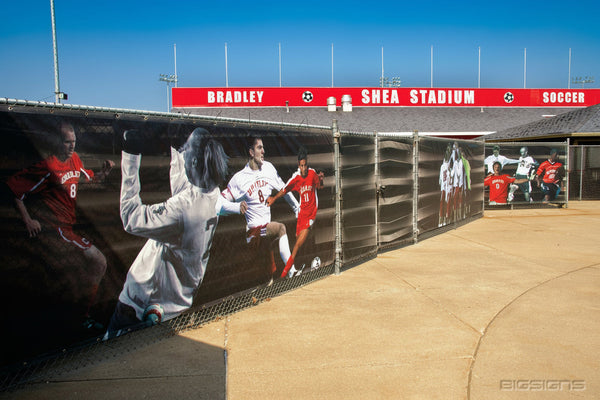
One of the biggest advantages of investing in an athletic windscreen is the ability to customise it to reflect your team's identity or facility branding. Colours play a major role, with many schools opting for bold backdrops in their primary team colours. Mascots, motivational messages, and school names often appear prominently across long stretches of fence mesh, turning an ordinary fence into a powerful visual statement.
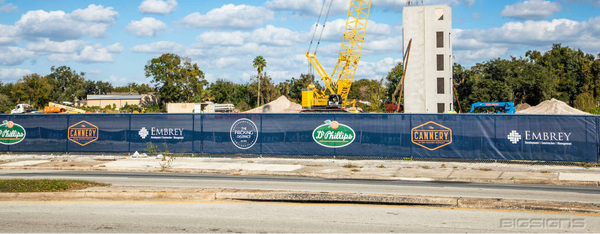
Custom logo placement is another important factor. Large central logos work well for outfield fences or tennis courts, while a repeating pattern may be better for long-distance visibility. Facilities hosting frequent tournaments often integrate sponsor logos directly into the design, giving advertisers high visibility while offsetting equipment costs.
Finishing options ensure durability and proper fit. Reinforced edges prevent fraying, metal grommets secure the windscreen to the fence, and wind slits help reduce pressure on particularly windy fields. These small details play a major role in longevity.
Examples from collegiate programs such as Babson College demonstrate how effective thoughtful customisation can be, with cohesive fencing graphics that unify the entire athletic complex.
Sizing & Installation Tips
Sizing an athletic windscreen correctly is crucial. A mismeasured fence can lead to uneven tension, sagging, or installation delays. Always measure from tension bar to tension bar, not post to post, and double-check the height of the fence, not just the height of the fencing fabric, since rail spacing may differ between fields.
Common mistakes include forgetting to account for slopes or incorrectly assuming two fences are the same height. Regulations also matter: NCAA fields, for instance, specify certain fence heights depending on the sport, which can affect how a windscreen is designed and printed.
Installation can be DIY for smaller screens, but professionally installed windscreens tend to last longer, especially on windy fields or large-scale baseball and softball installations. When a windscreen is stretched properly, it not only looks cleaner but also reduces the risk of premature tearing.
Cost Factors & Budget Planning
Costs for an athletic windscreen vary based on material, print complexity, size, and overall quantity. Mesh tends to be the most cost-effective long-term solution because of its durability and ease of installation. Vinyl options cost more but offer unmatched graphic clarity and strong branding presence.
Most facilities choose mesh because the value over several years is significantly higher. If you're working with limited budgets, consider combining multiple branding projects, such as fence screen printing, scoreboard graphics, and dugout decals, into one order to maximise savings and maintain a consistent look.
How to Choose the Right Windscreen for Your Facility

Choosing the right athletic windscreen becomes much easier once you identify your priorities. The type of sport matters: tennis courts need visual consistency, while football fields prioritise privacy. Climate is another deciding factor, since high-wind regions benefit from breathable fence mesh and milder regions can handle denser screens.
Branding requirements can influence the choice as well. If your program values bold graphics or sponsorship visibility, a higher-density mesh or vinyl option might be appropriate. Finally, your budget determines how far you can go with custom printing, finishing upgrades, or edge reinforcement.
Final Thoughts
A well-designed athletic windscreen enhances your field’s appearance, improves the athlete experience, and boosts overall brand visibility. From controlling wind flow to transforming a plain fence into a bold visual backdrop, a windscreen is one of the most impactful upgrades a facility can invest in.
If you're ready to elevate your sports complex, BIGSIGNS.com offers design consultations, mock-ups, and a wide selection of premium fence screen materials.
Explore real project examples, request a quote, or speak to a specialist who can recommend the perfect solution at BIGSIGNS.com.
Frequently Asked Questions
1. How long does an athletic windscreen last?
Most high-quality windscreens last between three and seven years, depending on material and weather exposure.
2. Can windscreens handle strong wind?
Mesh windscreens are designed for high-wind environments because they allow airflow, reducing strain on the fence.
3. Are custom prints resistant to fading?
Yes. UV-stable inks and protective coatings help maintain colour vibrancy over multiple seasons.
4. Can I install a windscreen myself?
Small installations can be DIY, but professional installation is recommended for large fields or windy regions.
5. What is the best material for long-term athletic use?
Breathable fence mesh is the most reliable option, offering durability, airflow, and excellent print performance.

Ready to see your design?
Tell us what you're branding and send your logo. We'll send a free digital mock-up and a quote.
Prefer to talk? Call 800-790-7611
Get A FREE Mock-Up & Quote
Let customers speak for us
The fence scrim was well received on the site. The Superintendent said it was the nicest scrim he's ever had. Great job!

Hi Mario, thanks for following up. The graphic looks great and we are very happy with the results. Thanks so much for the easy process and great service.
Thank you so much!

Everybody loves the product, so we expect to get some more.

It looks great- and the quality is way better than expected. Sorry it was a bit of a hassle. Thanks again!!!

We ordered windscreens to help advertise our new residential development, and they turned out great. Todd Simms was extremely helpful every step of the way—whether it was design, shipping, or answering any questions we had. Overall, excellent customer service and a great product.
Corey I want to thank you for your patience throughout this entire process. You have been fantastic and I am extremely excited to see how these look. Thank you so much.

I chose BIGSIGNS because I was impressed that they have worked with major colleges all over the U.S., and their prices were very reasonable. I absolutely loved working with Mario in sales. I'll admit, I probably wasn't the easiest customer due to my indecisiveness, but he was incredibly patient and helped make the process smooth from start to finish. The team completely nailed our project, and I already recommended them to others. The final result over-exceeded my expectations. This was a big-time project for a smaller school, and my goal was to have people see it and be wowed. Mission accomplished!
Mario, we used the banner as a backdrop for a trade show last weekend. It was a huge success!
We received our step and repeat a couple of days ago and it turned out great!!!! Thank you for your patience working with me until I made a decision on a design. We actually took it to a job fair yesterday and had people comment on it. In fact, I just sent your contact information to a gentleman from Amherst ISD. His name is Jose Gonzales. I hope he contacts you because he seemed very interested. I will definitely refer others to you in the future as well. Once again, thank you for all you did for us. I know we will get many uses out of it.Thanks- Jarod

Let me start off by saying the signage is even more impressive in person than in your brochures or mock ups, which is hard to do. I love most everything about it. Also appreciate you guys busting your ass to get it done for our regionals tomorrow. You should feel free to use me as a reference if desired. The back of the scoreboard was done as well and looked fantastic. The back of the dugout was also done and looked great. Pretty impressive really. Thanks
Over 400,000 runners will cross a Rock n Roll Marathon or 1/2 Marathon finish line, all of them crossing a BigSigns GatorAd finish line, specially formulated as non-slip safe no matter the weather! Thank you, BigSigns!

BIGSIGNS's ModStar gave us the ease of use, customization, and portability we needed. Modstar displayed sponsors for all seventeen nation-wide Game Breakers events; we are now repurposing the existing frames with new branding for our Copa-de-Calle events.

Just wanted to let you know HOW FANTASTIC the banner is. We have had so many compliments on this banner. Thank you!!!

This is Stevie Medina with the Raton Tiger booster club over in Raton. I just wanted to say thank you for those on deck circles. They're amazing. We gave them out to the softball team and the baseball team. And they were super stoked to get them. They loved them. A lot of the kids like, what are those? Those are so cool. Those are so neat. So they really got a kick out of them. Appreciate you. How quickly you guys turn those around. Boy, we had them super fast. I just wanted to say thank you. Thank you much. And no need to return my phone call. I just wanted to let you know that we're enjoying them. And we appreciate all your help on it.

Ordered a door skin for our volleyball program. Customer service department was great ensuring the order was completed correctly in the end. Design team was accommodating with changes & requests to create a great final product!